Search Results for "vokal gwsm"
Showing results for vocal gun
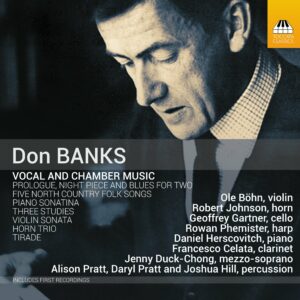
Don Banks: Vocal and Chamber Music
During his short life Don Banks (1923–80) enjoyed a reputation as the leading modernist among Australian composers. Studies with Mátyás Seiber, Milton Babbitt and, especially, Luigi Dallapiccola helped refine his serial technique, but his music never retreated into academic abstraction, as this recital of chamber and vocal works demonstrates: it retained a keen sense of drama, an ear for atmosphere, a rather angular lyricism and, occasionally, a touch of humour.
Robert Johnson, horn (Tracks 1–3)
Ole Böhn, violin (Tracks 1–3, 18)
Jenny Duck-Chong, mezzo-soprano (Tracks 4–8, 19–21)
Francesco Celata, clarinet (Tracks 9–11)
Geoffrey Gartner, cello (Tracks 12–14)
Rowan Phemister, harp (Tracks 19–21)
David Kim-Boyle, siren (Track 21)
Alison Pratt, Daryl Pratt and Joshua Hill, percussion (Tracks 19–21)
Daniel Herscovitch, piano
In Handel’s Shadow: Vocal Music by his Rivals in 18th-Century London
The figure of George Frideric Handel cast a long shadow over musical London in the first half of the eighteenth century, condemning many of his contemporaries – fine composers themselves – to long years of obscurity. This recording throws light into forgotten corners and discovers some glittering gems, some of them demanding dazzling vocal fireworks from their performers. Several of these composers set scenes from Classical mythology or Old Testament narratives – but they also explore the underside of the Baroque psyche in one of David’s darkest psalms and in a representation of Arcadian madness.
Lux et Umbrae
Robert Crowe, soprano and artistic director
Annette Fischer, soprano
Julia Nilsen-Savage, cello
Sigrun Richter, archlute
Michael Eberth, harpsichord
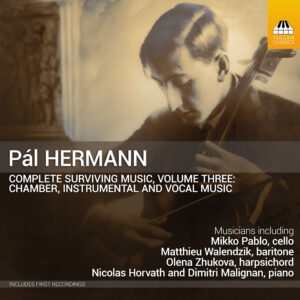
Pál Hermann: Complete Surviving Music, Volume Three – Chamber Instrumental and Vocal Music
Pál Hermann, born in Budapest in 1902, was not only one of the leading cellists of his generation; he was also an important composer, one of the major figures in Hungarian music in the generation after his teachers Bartók and Kodály. But since only two of his works were published before his early death – in 1944, at the hands of the Nazis – and many more of them were lost, he has not had the esteem that he deserves. The kaleidoscopic variety of the works on this third, and final, volume of his surviving compositions – biting Bartókian piano pieces, Neo-Baroque essays of considerable contrapuntal ingenuity, songs with a French Impressionist flavour, even a sly transcription of a foxtrot – underlines how much was lost with his murder.
Nicolas Horvath, piano
Dimitri Malignan, piano
Elizaveta Agrafenina, soprano
Sára Gutvill, mezzo-soprano
Irina Bedicova, mezzo-soprano
Paul van Gastel, tenor
Pierre Mak, baritone
Matthieu Walendzik, baritone
Reine-Marie Verhagen, soprano recorder
Inês d’Avena, alto recorder
Dante Jongerius, tenor recorder
Punto Bawono, Baroque lute
Olena Zhukova, harpsichord
Olena Matselyukh, organ
Jean-Pierre Dassonville, horn
Sadie Fields, violin
Mikko Pablo, cello
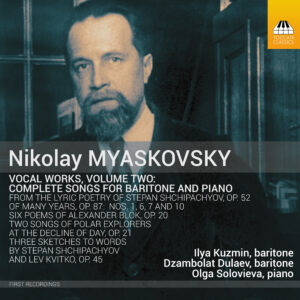
Nikolay Myaskovsky: Vocal Works, Volume Two: Complete Songs for Baritone and Piano
Nikolay Myaskovsky (1881–1950) was given the sobriquet of ‘the conscience of Russian music’ thanks to his dignified bearing and quiet wisdom – qualities reflected in the unemphatic strength of his music. His orchestral, chamber and instrumental works are regaining the currency they once enjoyed, but his large corpus of songs, many of them understated masterpieces, has yet to attract systematic attention – a situation this series hopes to remedy. This second album presents his entire output of songs for baritone and piano, most of them early works responding to Russian lyric poetry with the calm dignity typical of his compositions – though there is the occasional flash of passion.
Ilya Kuzmin, baritone
Dzambolat Dulaev, baritone
Olga Solovieva, piano
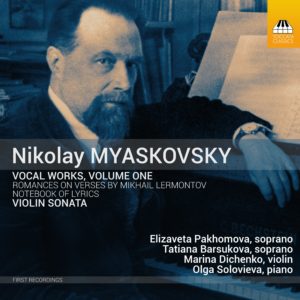
Nikolai Myaskovsky: Vocal Works, Volume One
The dignified bearing and quiet wisdom of Nikolai Myaskovsky (1881–1950) gained him the sobriquet of ‘the conscience of Russian music’ – and those qualities are reflected in the unemphatic strength of his music. His orchestral, chamber and instrumental works are regaining the currency they once enjoyed, but his large corpus of songs, many of them understated masterpieces, has yet to attract systematic attention – a situation this series hopes to remedy. The pairing here of his late Violin Sonata with his last two song-cycles for soprano and piano mirrors the Moscow concert in 1947 when all three were given their first performances.
Elizaveta Pakhomova, soprano
Tatiana Barsukova, soprano
Marina Dichenko, violin
Olga Solovieva, piano
The Harmonious Musick of John Jenkins: Volume Two: Suites, Airs and Vocal Music
Extent: 311 pages
Composition: Demy octavo
8 illustrations, b/w
82 music examples
List of Sources for Jenkins’ Music
List of Jenkins’ Works
Bibliography
Select Discography
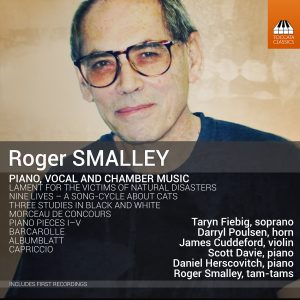
Roger SMALLEY: Piano, Vocal and Chamber Music
Roger Smalley (1943–2015) made his mark, first in his native Britain and then in Australia, as composer, pianist, conductor, writer, academic and teacher. Although as performer and commentator he was at the forefront of musical modernism, he was also very fond of nineteenth-century Romanticism, and much of his music bridges the gap between old and new, retaining its roots in the past while reflecting the concerns of his own time, as the works on this album demonstrate.
Taryn Fiebig, soprano (Tracks 2–10)
Darryl Poulsen, horn (Tracks 22)
James Cuddeford, violin (Tracks 11)
Daniel Herscovitch, piano (Track 1)
Scott Davie, piano (Tracks 2–10)
Roger Smalley, tam-tams (Track 22)
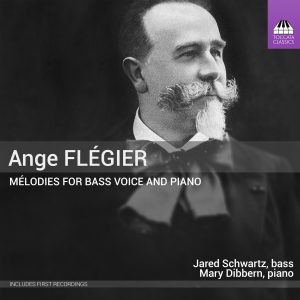
Ange Flégier: Mélodies for Bass Voice and Piano
Although the French composer Ange Flégier (1846–1927) has now been lost from view, he enjoyed considerable fame in his own time thanks to the extraordinary reception of his song Le Cor. Indeed, the mélodie holds a predominant place in his catalogue of more than 350 works. Flégier’s songs, composed for his colleagues at the Opéra de Paris, are large-scale and orchestrally conceived, sitting stylistically close to Duparc in their dignified drama. Many of them receive their first recordings or first modern recordings here.
Jared Schwartz, bass
Mary Dibbern, piano
Thomas Demer, viola (Track 9)
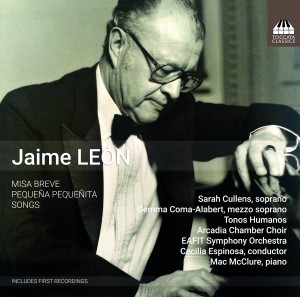
Jaime León: Vocal Music
Born in 1921, Jaime León is now the Grand Old Man of Colombian music. A vital figure in the development of Colombian art-music, León has been pianist (he is a grand-student of Clara Schumann), conductor, teacher, administrator and composer. His Misa breve has an innocent sincerity reminiscent of Poulenc's religious music, and although the word-setting in his songs is subtle and imaginative, they have the same melodic immediacy and uncomplicated appeal.
Sarah Cullens, soprano; Gemma Coma-Alabert, mezzo soprano; Tonos Humanos; Arcadia Chamber Choir; EAFIT Symphony Orchestra; Cecilia Espinosa, conductor; Mac McClure, piano
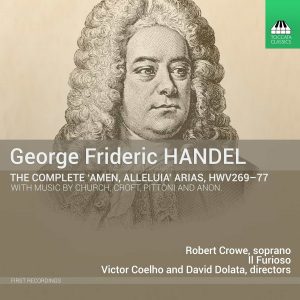
George Frideric Handel: The ‘Amen, Alleluia’ Arias
Over a period of some twenty years, from the late 1720s, Handel composed a series of virtuoso arias using only the words ‘Amen’ and ‘Allelujah’ as his texts, probably for use in private worship. Here they receive their first recordings, set in a context of contemporary sacred song and instrumental music – and are heard in the extraordinarily dramatic timbres of a male-soprano voice.
Robert Crowe, soprano (Tracks 1, 3–6, 10–12, 14, 17, 19, 21, 22)
II Furioso
Victor Coelho, theorbo (Tracks 1, 3–9, 11, 12, 19, 21, 22)
David Dolata, theorbo (Tracks 1-6, 11–13, 19–22)
Juvenal Correa-Salas, organ
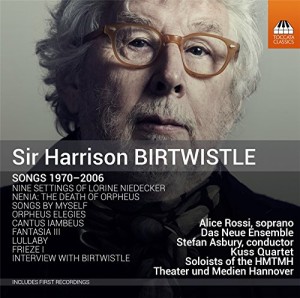
Sir Harrison Birtwistle: Songs 1970-2006
Instrumental and vocal techniques are intertwined in the music of Harrison Birtwistle: he often treats the voice instrumentally and his instrumental writing has vocal characteristics. Many of his works for small ensembles, with or without voices, occupy this common ground, his highly individual style juxtaposing the static and the violently dynamic and intersecting with his fondness for ritual and myth – not least a recurrent concern with the figure of Orpheus. This recording presents some of these relatively neglected pieces, recorded live in the presence of the composer, who also talks about his songs in interview.
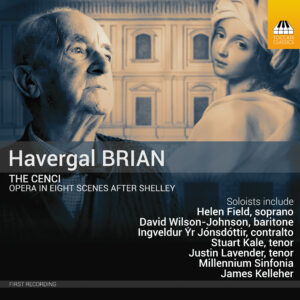
Havergal Brian: The Cenci
The Cenci (1951–52) is Havergal Brian’s operatic realisation of Shelley’s gruesome tale of incest and parricide in Renaissance Italy. The score calls it simply ‘Opera in Eight Scenes’, but it rarely goes in for grand tunes; instead, its dark colours reflect Shelley’s fascination with the struggle between good and evil. Stylistically, it is an unusual but highly effective hybrid: a music-drama focused on the intense delivery of Shelley’s text, with the declamatory style of the vocal lines echoing such recent oratorios as Stravinsky’s Oedipus Rex and Honegger’s Jeanne d’Arc au bûcher, and the freewheeling orchestral writing producing something of a vocal symphony.
Helen Field, soprano
David Wilson-Johnson, baritone
Ingveldur Ýr Jónsdóttir, contralto
Stuart Kale, tenor
Justin Lavender, tenor
Jeffery Carl, baritone
Nicholas Buxton, tenor
Devon Harrison, bass
Serena Kay, soprano
The Millennium Sinfonia
James Kelleher, conductor
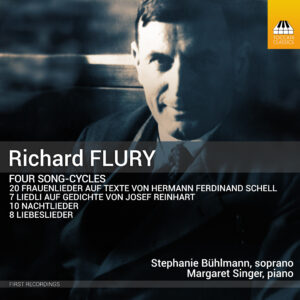
Richard Flury: Four Song-Cycles
The output of Richard Flury (1896-1967), one of Switzerland’s most prolific composers, ranges from operas and ballets to symphonies, instrumental concertos, sacred and secular vocal works, chamber music and no fewer than 181 songs with piano accompaniment. These four song-cycles, written between 1920 and 1946, contain 45 of them, their concision nonetheless embracing an expansive, Romantic style of which Schumann himself might have approved. The prevailing mood is one of an open-hearted sincerity, occasionally enlivened by a dash of humour.
Stephanie Bühlmann, soprano
Margaret Singer, piano
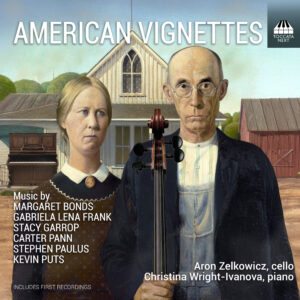
American Vignettes: Contemporary Works for Cello and Piano
Though quintessentially American in spirit, the musical snapshots in this album are as diverse as the men and women who composed them. Drawing from influences as disparate as the blues, jazz, Broadway, gospel, folksong and the wild west, these ‘American vignettes’ merge popular idioms into a new canon of the repertoire for cello and piano. The distinctive voices of six US composers, from the late twentieth and early 21st centuries, here come together to weave a virtuosic and colourful tapestry of Americana.
Aron Zelkowicz, cello
Christina Wright-Ivanova, piano
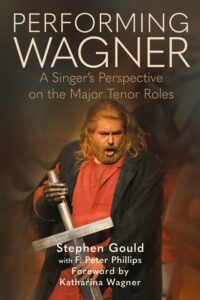
Performing Wagner
USE CODE BB110 at Boydell & Brewer to save £35!
A Singer’s Perspective on the Major Tenor Roles
by Stephen Gould and F. Peter Phillips
Foreword – Katharina Wagner
Introduction – F. Peter Phillips
154 Pages
Hardcover
23.4 x 15.6 cm
25 colour and 22 b/w illustrations
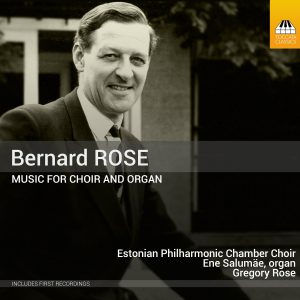
Bernard Rose: Music for Choir and Organ
As conductor, trainer and composer, Bernard Rose (1916–96) was one of the mainstays of English choral music in the second half of the twentieth century. His compositions occupy an honourable place within the mainstream of the cathedral tradition, being both grounded in the past and leaning gently into the future, and speaking its language of stylistic restraint and understated passion – and occasionally flaring into moment of considerable drama. This recording, sung by one of Europe’s leading vocal ensembles and conducted by the composer’s son, makes a good number of his works available for the first time.
Estonian Philharmonic Chamber Choir
Ene Salumäe, organ
Gregory Rose, conductor
Annike Lohmus, soprano
Karolina Kriis, soprano
Marianne Parna, contralto
Raul Mikson, tenor
Rainer Vilu, baritone